Conference Presentation: Change Management for AI Adoption
Overview
I developed and delivered a 60-minute working session at the Cella Illuminate Conference 2025, focused on a question many creative and operations leaders are actively navigating: how to adopt AI in a way that is strategic, human-centered, and sustainable.
Rather than positioning AI as a tool or shortcut, the session reframed AI as a teammate—one that needs to be intentionally onboarded, supported, and governed in order to deliver real value.
The session was grounded in my own hands-on experience leading AI adoption within a complex organization and focused on giving leaders a practical, relatable framework they could apply immediately.
What I Led
Designed and delivered a 60-minute conference session for creative operations leaders
Developed an original AI adoption framework based on real organizational use cases
Facilitated guided reflection and discussion to help attendees translate concepts into action
Created take-home reference materials to support continued learning and conversation after the session
This was intentionally designed as a working session, focused on clarity, applicability, and leadership confidence.
The Framework
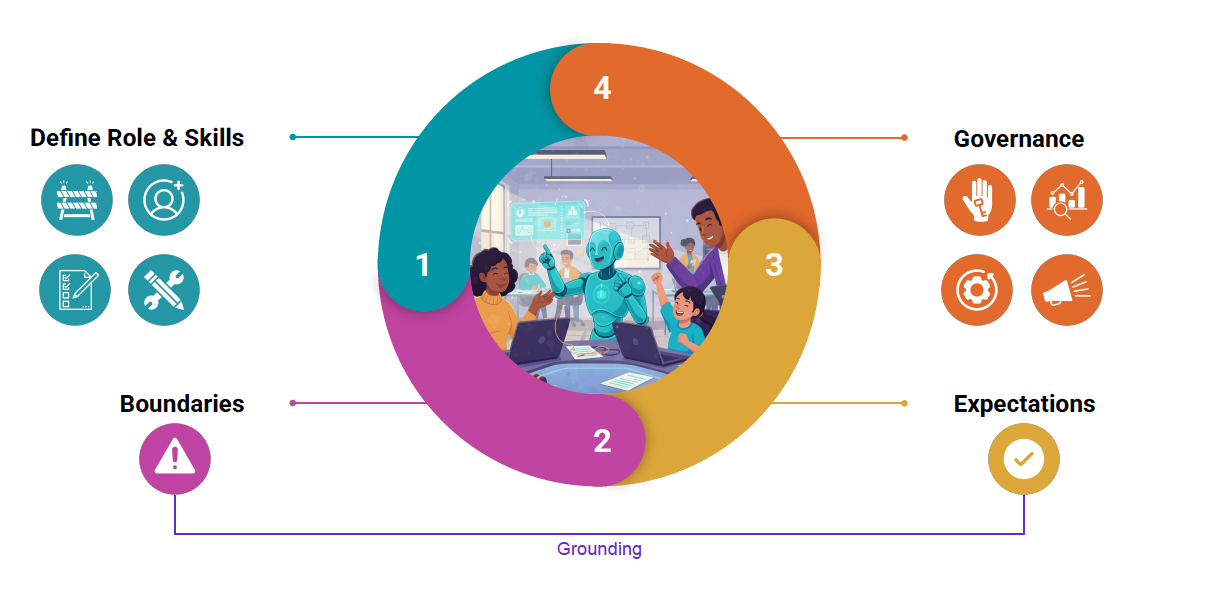
The core of the session centered on a familiar analogy: onboarding a new teammate.
Most leaders understand what successful onboarding looks like—and what happens when it goes wrong. By applying that same mental model to AI, the framework made adoption feel more approachable and actionable.
Key elements included:
Defining AI’s role and responsibilities, rather than expecting it to “do everything”
Establishing expectations for quality, trust, and use cases
Grounding AI outputs in strong inputs, such as briefs, transcripts, and brand guidance
Introducing different prompting approaches based on task type and intent
This structure helped leaders move beyond experimentation toward intentional, responsible use.
What This Enabled
Helped leaders reframe AI adoption in human, leadership-driven terms
Reduced uncertainty by tying AI use to familiar onboarding and management concepts
Equipped attendees with practical next steps they could take within their own teams
Supported continued learning through take-home resources and prompting guides
Attendees left with a clearer path forward—one that balanced innovation with structure and trust.
Why This Matters
As AI becomes embedded in creative and operational workflows, successful adoption depends less on access and more on leadership, clarity, and change management.
This work reflects my approach to emerging technology: pairing strategy and systems with empathy, structure, and practical enablement—so teams can move forward with confidence rather than hesitation.